
Explore Smart & Sustainable Solar Energy Solutions
Discover solar technologies and renewable energy applications for homes, agriculture, transportation, commercial spaces and industries.
Our Solar Energy Solutions
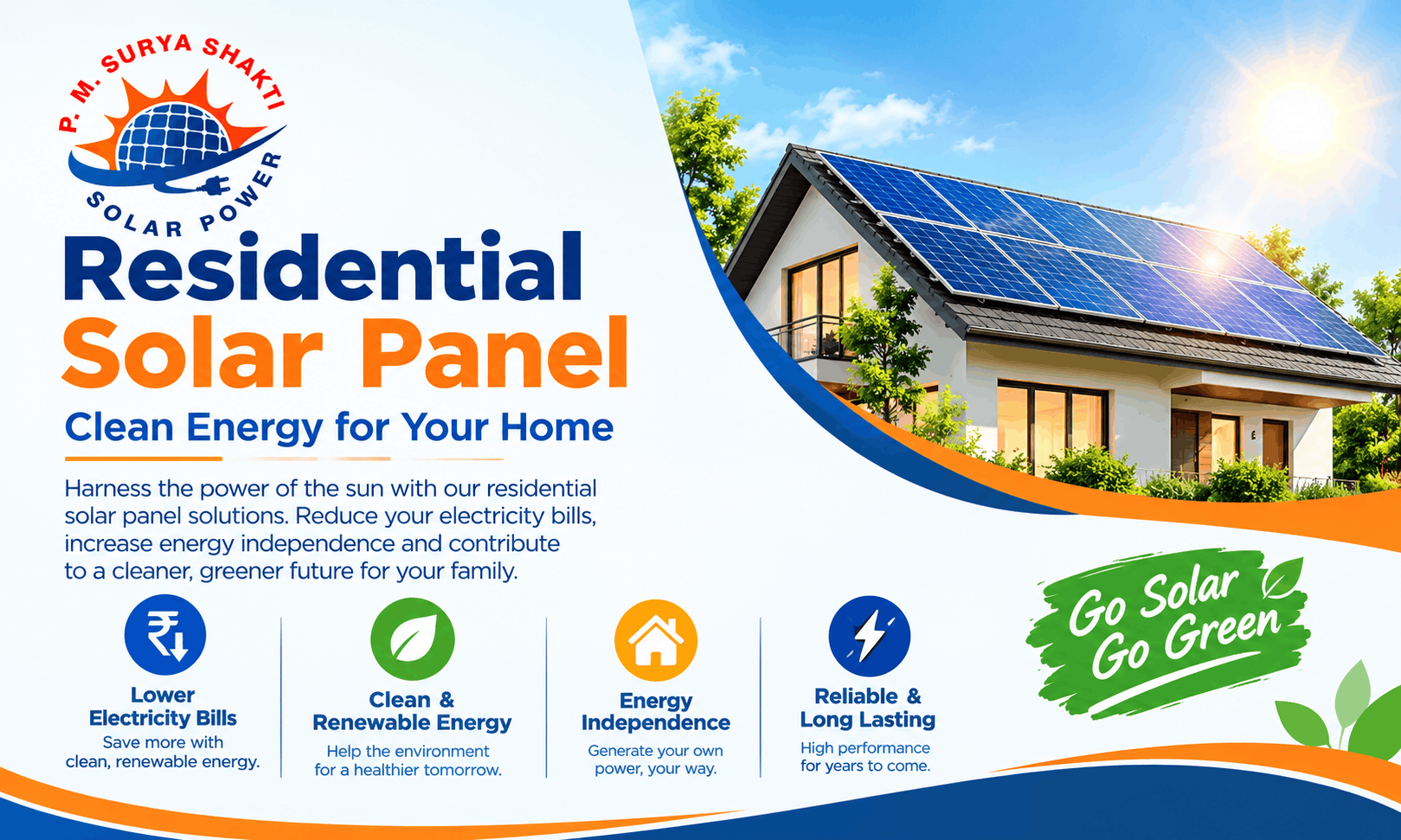
Residential Solar Panel Solutions
Discover how residential solar panels can help homeowners generate clean electricity, reduce dependence on conventional power sources and explore long-term energy savings.
Residential solar panels provide an effective way to harness sunlight and convert it into electricity for everyday household needs. By installing solar panels on suitable rooftops or other available spaces, homeowners can explore renewable energy options for lighting, fans, appliances and other electrical equipment. PM Surya Shakti shares informative content about residential solar panel systems, their working principles, installation considerations and potential benefits. Factors such as roof orientation, sunlight availability, household electricity consumption and system capacity can influence the performance of a solar installation..
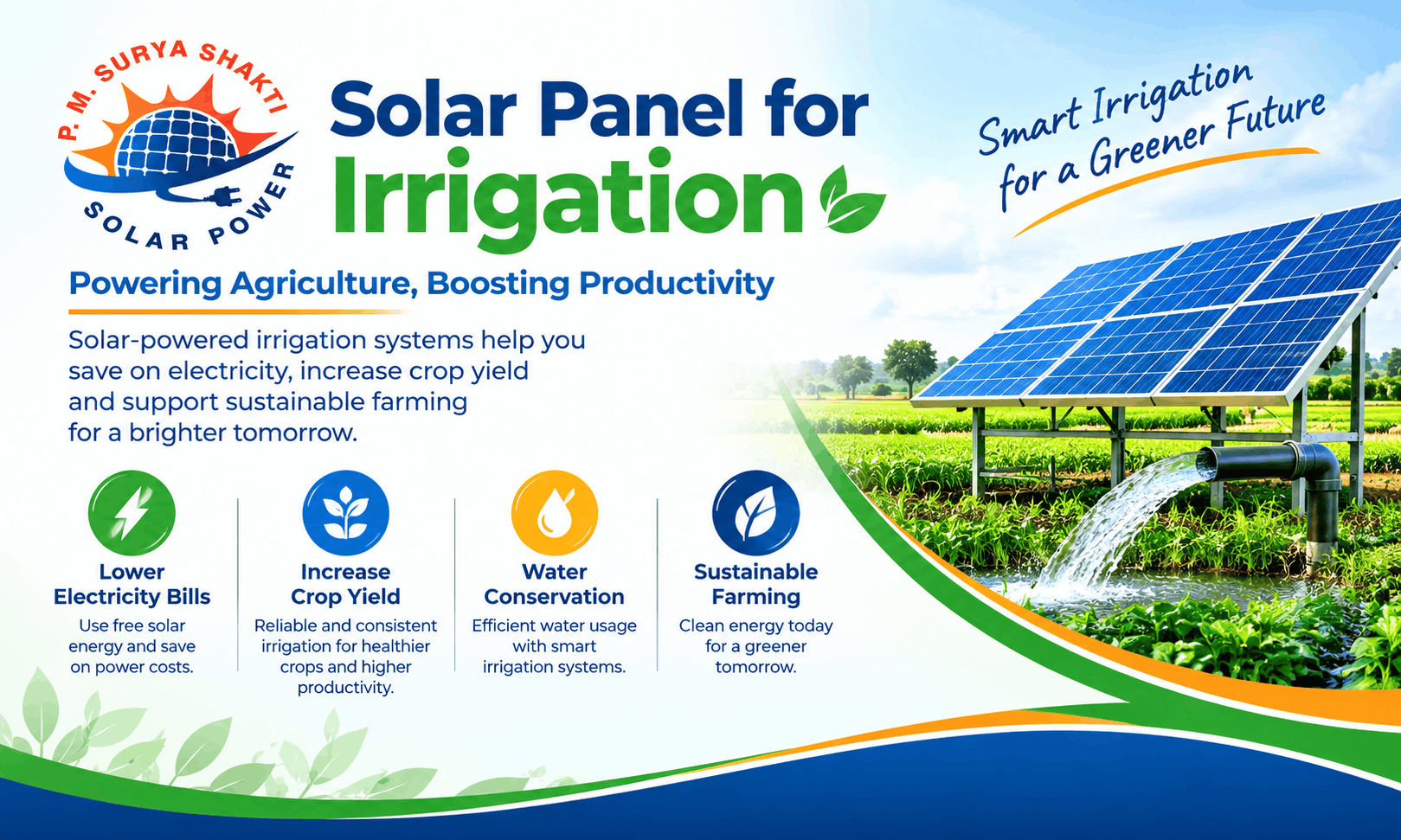
Solar-Powered Irrigation Solutions
Explore solar-powered irrigation systems designed to support agricultural water pumping, improve energy accessibility and encourage sustainable farming practices.
Solar-powered irrigation systems use energy generated by solar panels to operate water pumps for agricultural applications. These systems can help farmers access a renewable source of electricity for pumping water from suitable sources to fields, depending on the installation and available water supply. PM Surya Shakti provides information about solar irrigation technology, its working principles, system components and potential applications in farming. Solar-powered pumps can be particularly useful in locations where access to grid electricity is limited or electricity supply is inconsistent….
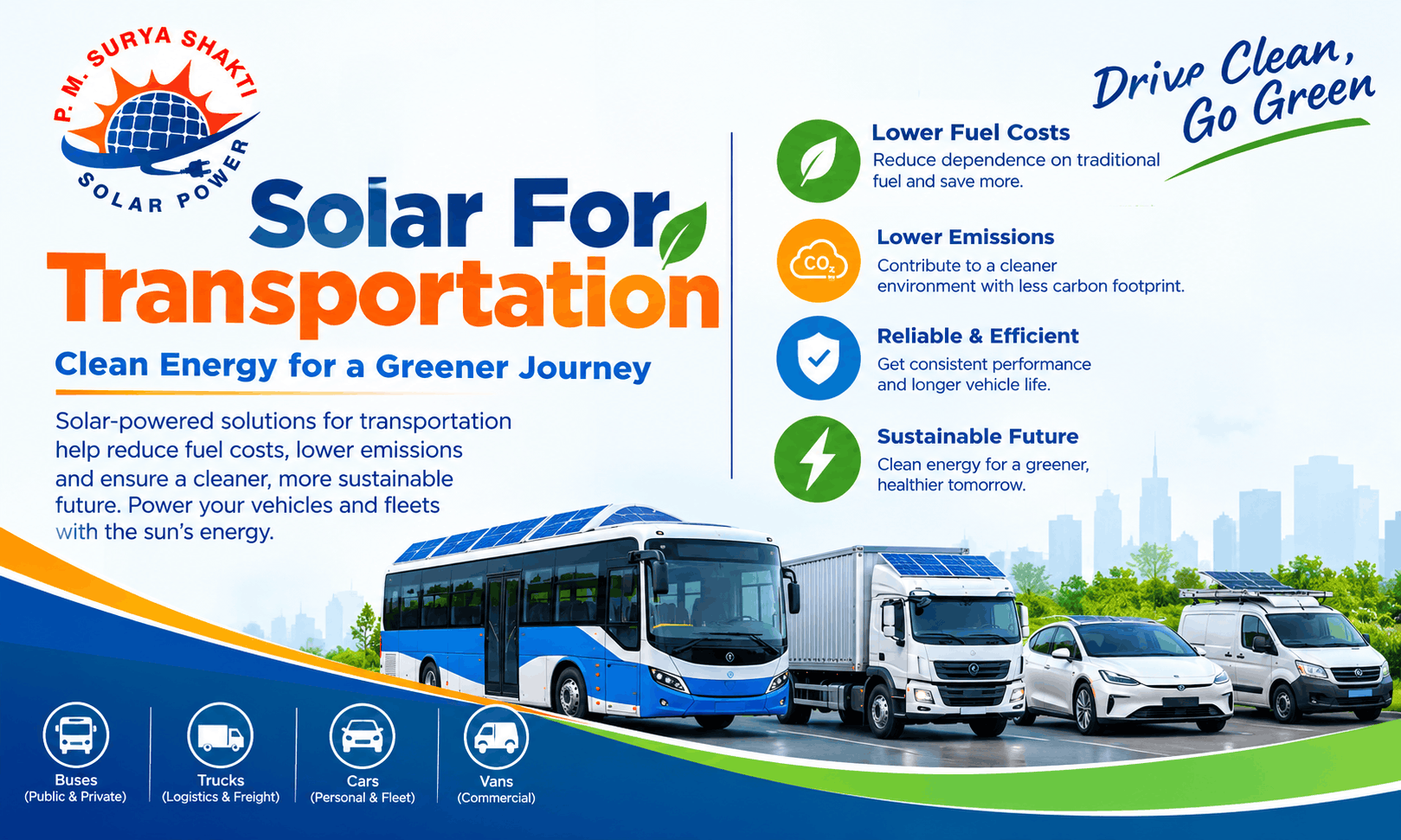
Solar Energy for Transportation
Learn how solar energy can support transportation through electric vehicle charging infrastructure, solar-powered facilities and other renewable energy applications.
Solar energy is creating new opportunities for the transportation sector by providing a renewable source of electricity for selected transport-related applications. Solar power can be used to support electric vehicle charging stations, parking facilities, roadside infrastructure and other electrical systems associated with modern transportation. PM Surya Shakti explores the connection between solar energy and sustainable mobility, helping visitors understand how photovoltaic systems can generate electricity for transportation-related needs. Solar-powered charging infrastructure can draw energy from solar panels, while grid connections or battery storage may be used depending on the system design…
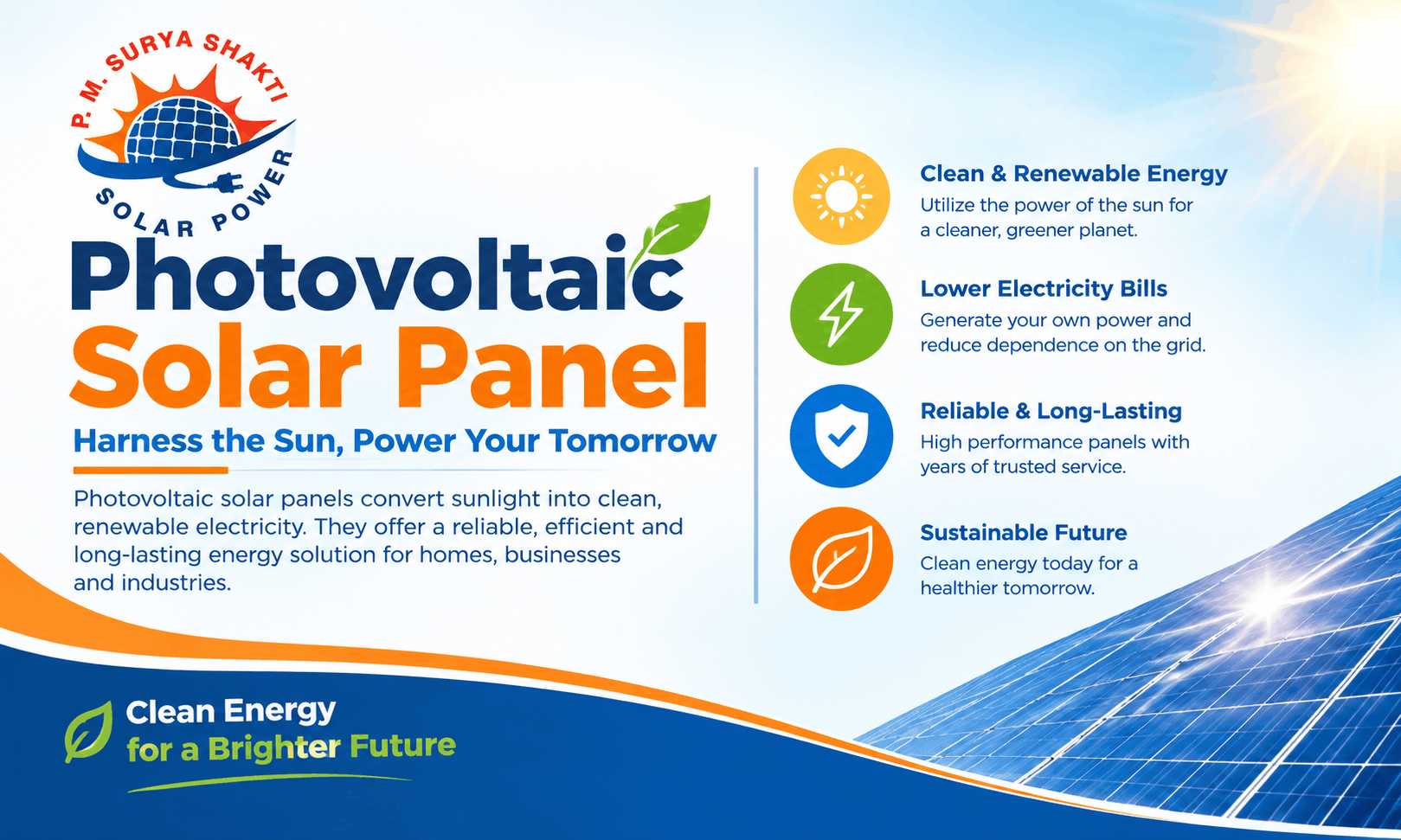
Photovoltaic Solar Panel Technology
Understand how photovoltaic solar panels convert sunlight into electricity and support renewable power generation for residential, agricultural, commercial and industrial applications.
Photovoltaic (PV) solar panels are an essential component of modern solar energy systems. They contain solar cells that convert sunlight directly into electrical energy through the photovoltaic effect. This technology allows sunlight to be transformed into usable electricity without requiring fuel combustion during the generation process. A photovoltaic system typically includes solar panels and may also incorporate an inverter, mounting structures, electrical protection equipment, monitoring devices and battery storage, depending on its configuration.
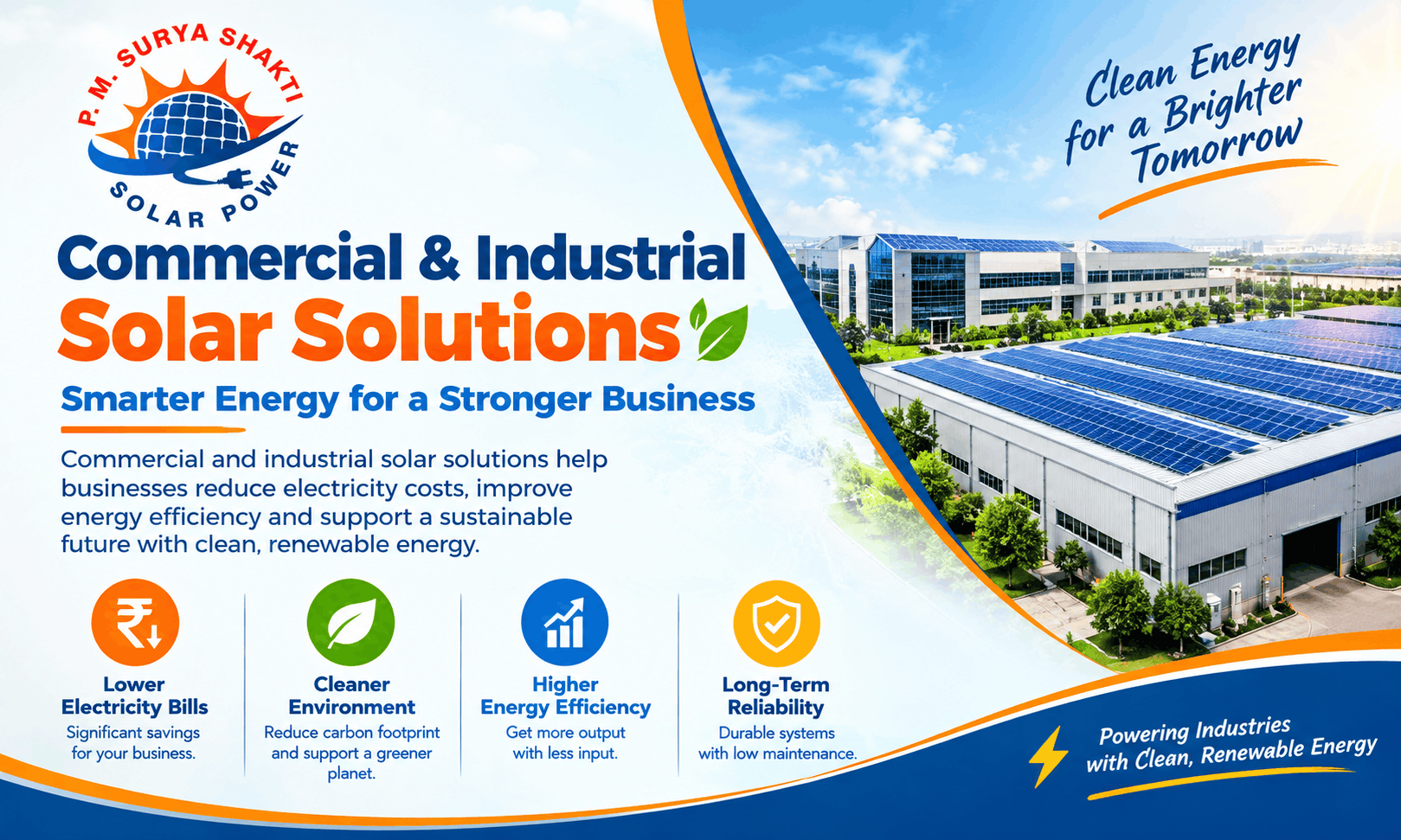
Commercial & Industrial Solar Solutions
Explore solar energy systems for offices, factories, warehouses, retail spaces and industrial facilities seeking to improve energy efficiency and manage electricity expenses.
Commercial and industrial solar solutions help businesses explore renewable electricity generation for their operational requirements. Offices, manufacturing units, warehouses, shopping centres and other commercial facilities often have substantial electricity demands that may make solar energy worth evaluating. Solar panels can be installed on suitable rooftops, parking structures or available land, depending on the facility’s design and energy requirements. The electricity generated can support equipment, lighting, machinery and other electrical operations, subject to system capacity and operating conditions.
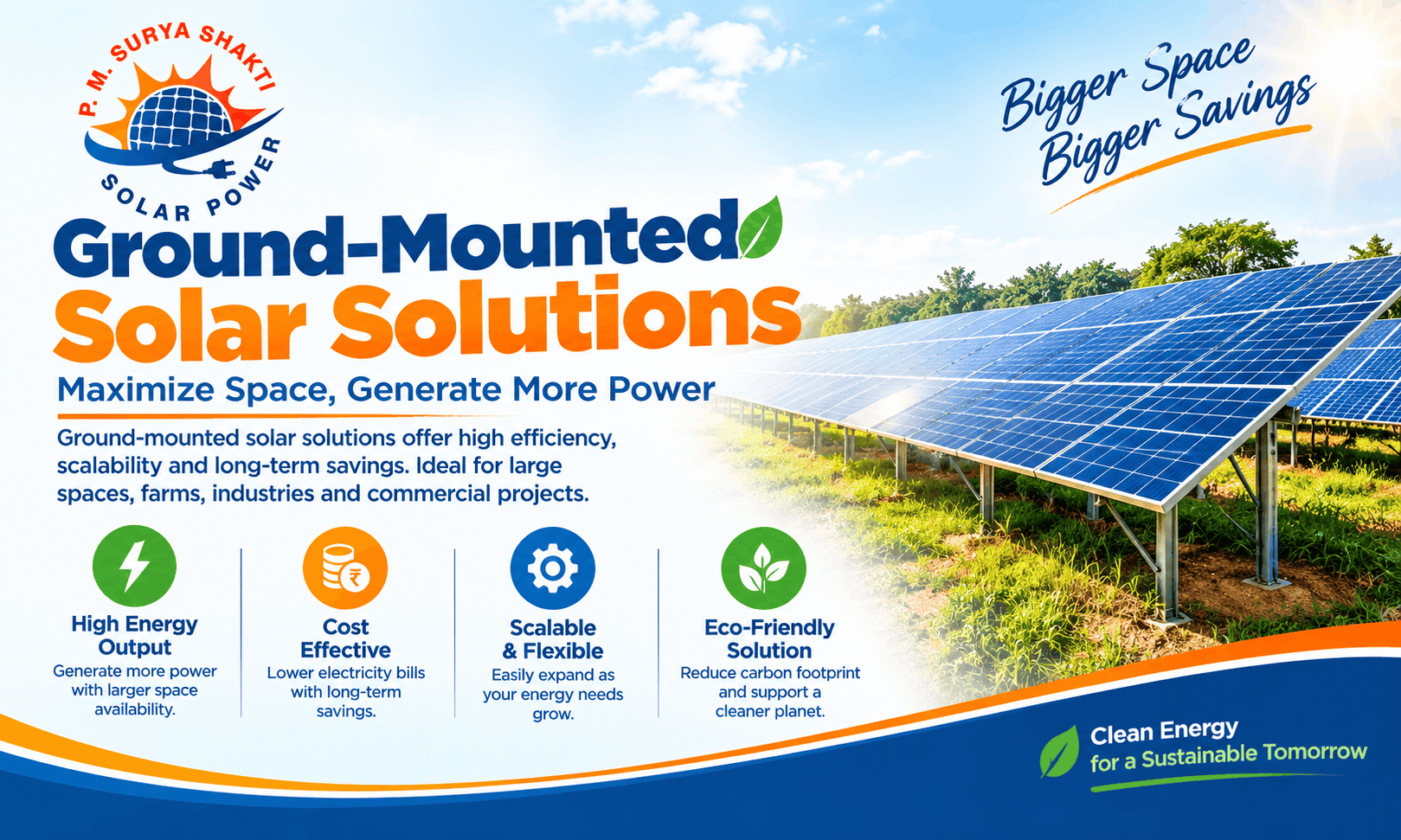
Ground-Mounted Solar Solutions
Discover ground-mounted solar installations that use suitable open land to accommodate solar panels and generate renewable electricity for a variety of energy requirements.
Ground-mounted solar solutions involve installing photovoltaic panels on support structures positioned directly on suitable land rather than on building rooftops. These systems are commonly considered for properties, commercial facilities and projects where adequate open space is available. One of the key advantages of ground-mounted installations is the flexibility they can offer in panel arrangement, orientation and accessibility for maintenance. Depending on the project design, these systems can be developed for individual facilities or larger solar power generation projects.
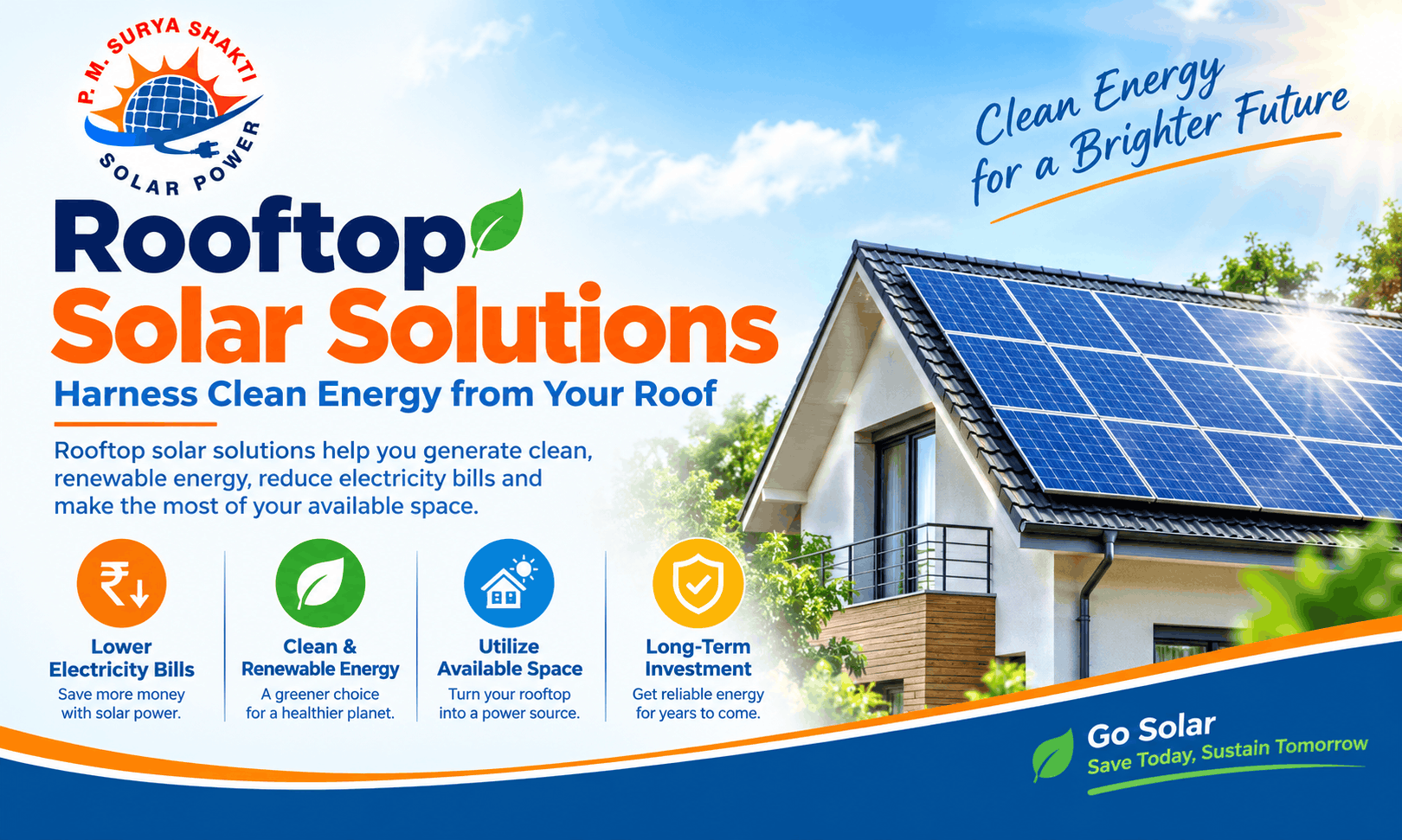
Rooftop Solar Panel Solutions
Explore rooftop solar systems that use available roof space to generate electricity for homes, offices, commercial buildings and industrial facilities.
Rooftop solar solutions involve installing photovoltaic panels on the roofs of residential, commercial or industrial buildings to generate electricity from sunlight. They offer an opportunity to make productive use of existing roof space while exploring renewable energy for everyday electrical requirements. A rooftop solar installation typically includes solar panels, mounting structures, electrical wiring and an inverter. Depending on the configuration, the system may be connected to the electricity grid or combined with battery storage to support specific energy needs..
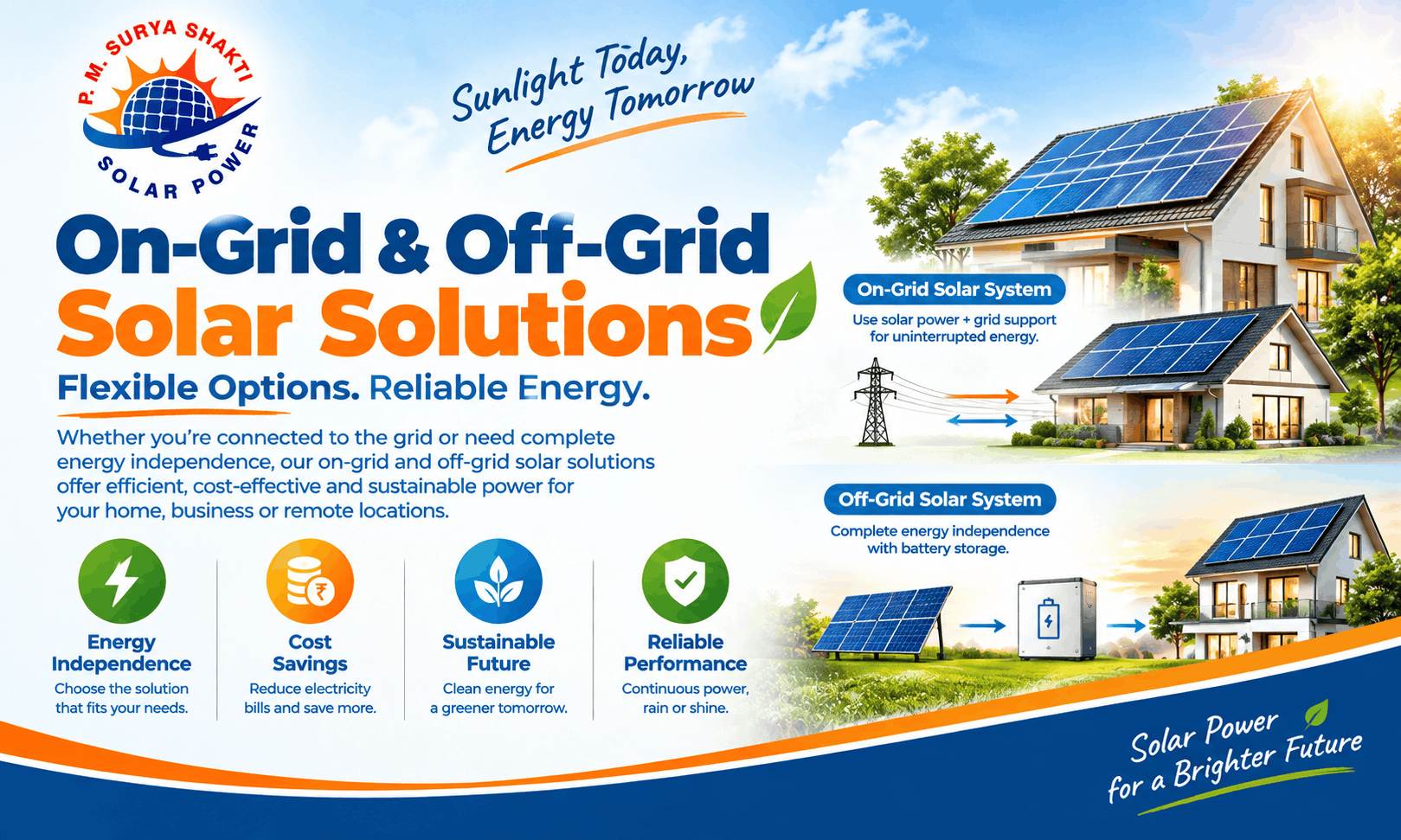
On-Grid & Off-Grid Solar Solutions
Understand the differences between on-grid and off-grid solar systems and explore how each configuration can meet different electricity requirements.
On-grid solar systems are connected to the local electricity grid. Solar panels generate electricity during daylight hours, and the building can use this power to meet its electrical needs. Depending on the system design and applicable utility rules, surplus electricity may be exported to the grid. Most conventional grid-connected systems shut down during a grid outage unless specifically designed with approved backup capability…. Off-grid solar systems operate independently of the electricity grid. They commonly use solar panels, battery storage and suitable power-conversion equipment to supply electricity when sunlight is unavailable. System sizing depends on energy consumption, required backup duration, sunlight conditions and battery capacity..
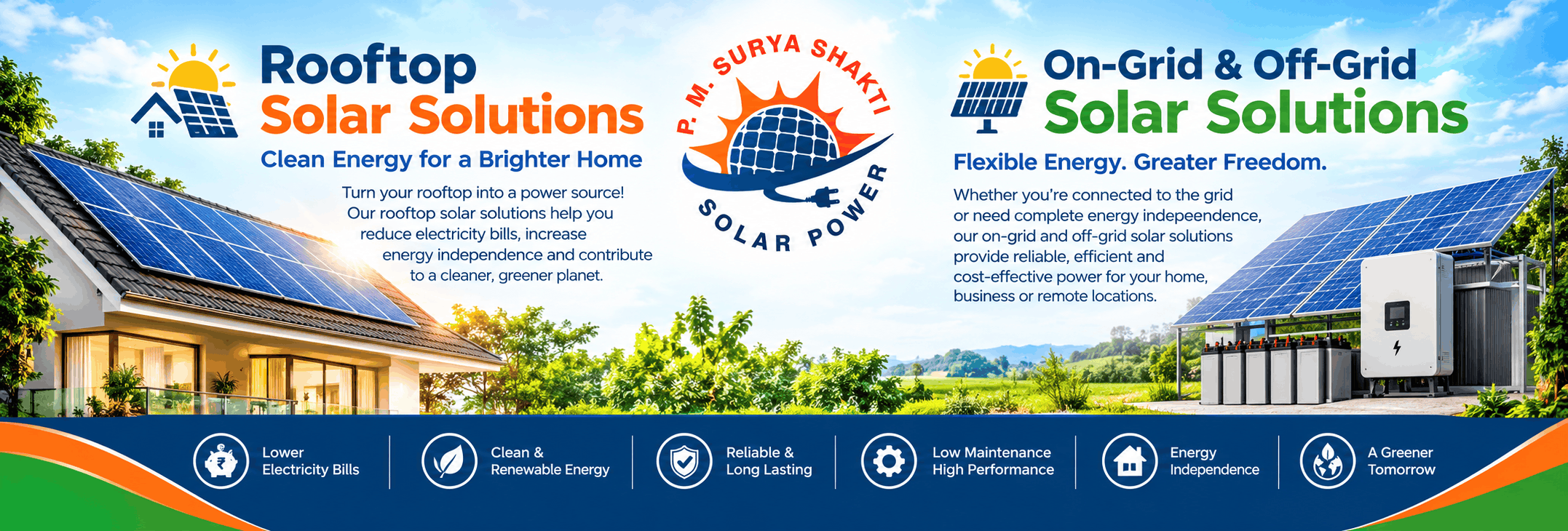
Powering a Brighter Future with Solar Energy
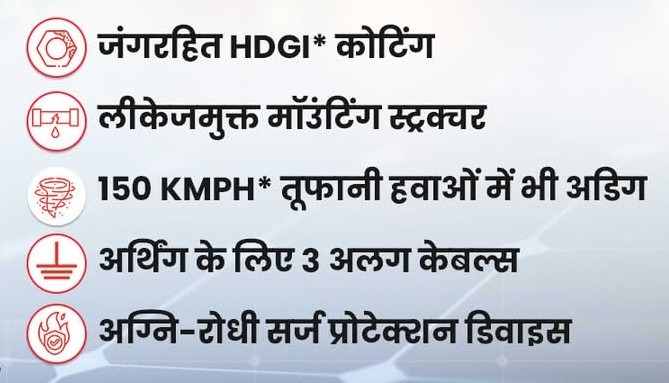
Advanced Solar Protection Technology
Strong, Safe & Reliable Solar Mounting Solutions for Every Weather Condition
Experience reliable and long-lasting solar performance with advanced solar mounting structures designed for strength, safety, and durability. Featuring HDGI (Hot-Dip Galvanized Iron) coating for enhanced rust resistance, leak-proof mounting solutions, and a robust structure engineered to withstand wind speeds of up to 150 km/h, these systems provide dependable support for rooftop solar installations. Equipped with three separate earthing cables for enhanced electrical safety and fire-resistant surge protection devices, our solar mounting solutions are designed to deliver greater stability, protection, and peace of mind..
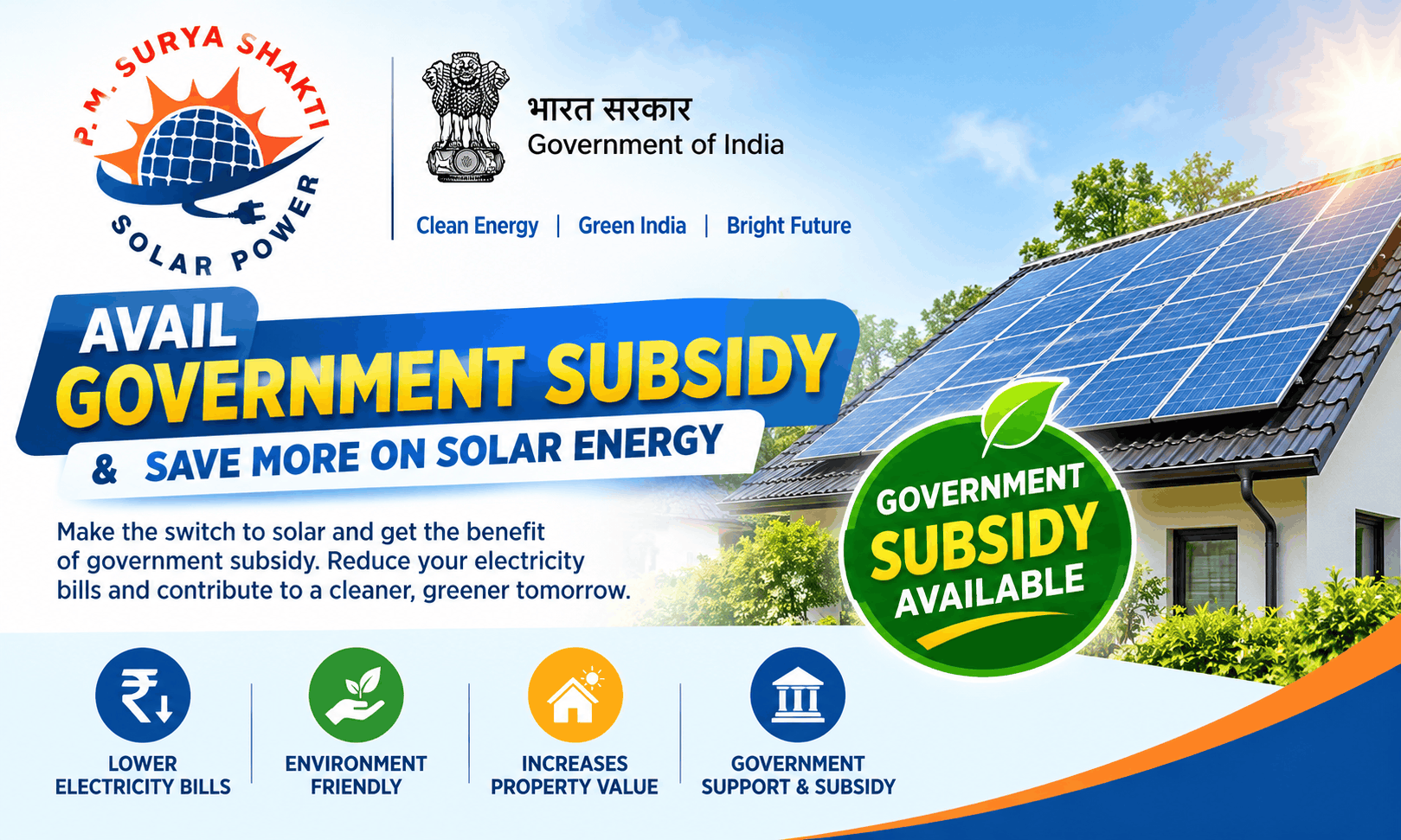
Government Subsidy Benefits
Make Solar Energy Affordable with Government Support
Switch to clean and renewable solar energy with the benefits of government subsidy schemes. Eligible residential households can receive financial assistance under the PM Surya Ghar: Muft Bijli Yojana, helping reduce the upfront cost of rooftop solar installation. Enjoy long-term electricity bill savings, lower energy expenses, and a more sustainable lifestyle with a solar power system tailored to your needs. Our team assists you with the installation process, scheme-related guidance, and documentation requirements to help make your solar journey simple and convenient. Subsidy is subject to government guidelines, eligibility, and approval..